
CCDV-P domain drill
CCDV-P practice questions: Advanced agent architecture and orchestration.
14 original questions on Advanced agent architecture and orchestration, which carries 17% of the Claude Certified Developer – Professional exam per the official exam guide. Study notes first, then the questions with an explanation for each. When this domain feels solid, take the timed CCDV-P practice exam and check the domain breakdown.
 Practice in ChatGPT
What to know about Advanced agent architecture and orchestration
- Multi-agent orchestration: supervisor and worker hierarchies, parallel subagent dispatch, delegation and context-isolation boundaries, communication between agents, and human approval flows. Know how each fails.
- Durable execution: session persistence, checkpointing, resumability and memory architecture for agents that must survive an interruption, a restart or a model version change.
- Architecture selection at scale: use production cost, reliability and quality data to decide whether a running system should move between workflow and agentic patterns.
- Choosing the agent harness, the framework and the reusable-pattern standards a team adopts.
- Context and memory architecture near a context limit or cost ceiling: compaction and context editing, persistent memory, instruction changes mid-conversation that keep the cache valid, and tool-use techniques that keep a large tool catalog out of the window.
Advanced agent architecture and orchestration questions
A lead agent dispatches six research subagents in parallel, each with a one-line task such as 'research the supplier market'. The results overlap heavily, several subagents search the same sources, and two angles the lead cared about are missed entirely. What is the most effective change?
Show answer
Answer: Have the lead write each brief with an objective, scope boundaries, the expected output format, and guidance on sources. A subagent starts with a fresh context and sees only the brief it is handed, so a vague brief produces duplicated and misdirected work. Briefs that state the objective, boundaries against sibling tasks, and the output format are what make parallel dispatch pay off. Sharing the whole transcript spends context without dividing the work, and deduplicating afterwards pays for the overlap and still leaves the gaps.
An operations agent runs on a managed agent platform with tools for reading dashboards, running diagnostics, and triggering production deployments. The team wants a person to approve every deployment before it runs, without adding prompts to the read-only tools. The platform offers per-tool permission policies, including one in which the server evaluates each call automatically. What configuration fits?
Show answer
Answer: An always-ask policy on the deployment tool so the session pauses for confirmation, with lighter policies on read-only tools. A requirement that a person reviews an action before it runs needs a policy that pauses the session until someone confirms. Automatic evaluation is useful for lowering prompt volume, but a call it judges safe runs before anyone sees it, so it is not a human checkpoint. A prompt rule is advisory, and log review finds a bad deployment after the fact.
An agent built on the Claude Agent SDK runs in ephemeral containers. When a container is replaced mid-task, the service tries to resume by session id on the new container and fails, because the session transcript lives on the old container's local disk. Which fix addresses the cause?
Show answer
Answer: Mirror session transcripts to shared storage through a session store, or carry the needed state into a new session as data. SDK sessions persist the conversation to files on the machine that ran them, so another host cannot resume unless the transcript is made available there, through a session store adapter or by restoring the file, or unless the application keeps its own state and starts fresh. File checkpointing tracks file changes rather than conversation history, and the session id is only a pointer to a transcript the new host does not have.
An agent resolves billing tickets with an open-ended tool loop. Six months of production data show that 94% of tickets follow the same four steps, cost per ticket varies fivefold, and a required verification step is occasionally skipped. What should the team do?
Show answer
Answer: Turn the common path into a fixed workflow with code-controlled steps, and route only unusual tickets to the agent loop. When production data shows the path is predictable, a workflow gives lower and steadier cost and makes the verification step impossible to skip, while the agent loop is kept for the cases that need open-ended decisions. More effort or a reviewing agent adds cost to every ticket to manage variance that the design itself creates.
A long-running research agent accumulates large tool results from file reads and searches, most of them stale within a few turns, and is approaching its context limit. It also needs key decisions to survive into later sessions. Which context policy fits?
Show answer
Answer: Clear old tool results with context editing, have the agent save durable facts to memory, and compact only near the limit. The three mechanisms do different jobs: context editing prunes stale tool results within a session, memory carries facts across sessions, and compaction summarizes when the conversation itself nears the limit. Summarizing every turn rewrites the prefix constantly, which defeats prompt caching and loses detail early. A larger window only postpones the problem and makes every turn more expensive.
An orchestrator fans a market analysis out to eight workers. Two workers hit rate limits and return an empty or partial result. The orchestrator writes a confident final report as though all eight sections were complete. What design change fixes this?
Show answer
Answer: Have each worker return a structured status with what is missing, and have the orchestrator retry or report gaps. Failures must cross the agent boundary as explicit data. A worker result that states complete, partial, or failed, with what is missing, lets the orchestrator retry, reassign, or disclose the gap, and orchestration code can enforce that check. Asking the orchestrator to self-assess relies on it noticing an absence it has no signal for, and running everything twice doubles cost while both runs can fail the same way.
Three specialist subagents produce a data extract, a code patch, and a written analysis. Each returns its full output to the orchestrator, which re-types all three into its final answer. The final answer contains transcription errors, and the orchestrator's context is nearly full. What design change fixes this?
Show answer
Answer: Have subagents write outputs to a shared store and return a short summary with a reference, so results are not re-typed. Passing large artifacts through a coordinator turns it into a lossy relay: every copy costs context and risks alteration. Letting subagents persist their work, such as files or records, and hand back a lightweight reference with a summary keeps fidelity and keeps the orchestrator's context for coordination. A bigger budget only delays the overflow, duplicate copies double the load, and forcing short outputs discards the detail the task needed.
A long-running agent posts 500 invoices to a ledger. The process crashes at invoice 312, and the restart runs the task from the beginning, posting the first 311 invoices a second time. Which design makes the run safely resumable?
Show answer
Answer: Checkpoint progress durably after each invoice and give each posting an idempotency key, so replays are harmless. Resumability needs two things: durable progress outside the process, so the run continues at invoice 312, and idempotent side effects, so a repeated call cannot post twice. A transaction spanning hours and an external ledger is not practical. The transcript restores context but does not stop a replayed tool call from executing, and reconciliation repairs duplicates after they have already reached the books.
A seven-step document pipeline with fixed prompts fails on about 30% of inputs, which need a different number of lookups than the pipeline assumes. The team has added branching rules for a year, and each new rule breaks an older one. What is the right next step?
Show answer
Answer: Move the variable part into an agent loop with tools and limits, keep the fixed steps around it, and gate on evals. When the number and order of steps depends on the input, hard-coded branching becomes the maintenance burden the data shows. An agent loop handles the variable part, deterministic steps stay deterministic, and evals plus cost and turn limits control the added variance. A larger model inside a fixed sequence still performs the wrong number of lookups, and retrying the same pipeline repeats the same mismatch.
A support agent holds long conversations whose history is served from the prompt cache. Mid-conversation, an operator sometimes needs to switch the agent into an escalation mode. The team implements this by editing the top-level system prompt, and every switch causes the full history to be reprocessed uncached. What is the better approach?
Show answer
Answer: Keep the system prompt byte-identical and append the instruction after the cached history as a new message. Caching is a prefix match and the system prompt sits ahead of the whole conversation, so editing it invalidates every cached turn. An instruction appended after the history leaves the prefix intact: on models that support it, a system-role message inside the messages array, otherwise text in the newest user turn. Breakpoints and lifetimes do not rescue a prefix whose earlier bytes changed.
Using the Claude Agent SDK, a team forks a session so that two branches can try different fixes for the same bug in parallel. Both branches run in the same working directory, and their edits overwrite each other. Why, and what is the fix?
Show answer
Answer: A fork copies conversation history, not the filesystem: give each branch its own worktree or directory for edits. Forking creates a new session that starts from a copy of the conversation, while file edits remain real changes in whatever directory the session runs in. Parallel branches therefore need separate working trees, or file checkpointing if the aim is to revert one branch's changes. The histories are independent after the fork, and plan mode would stop the edits rather than isolate them.
A multi-day agent is midway through a task when its model is scheduled for retirement. Its only record of progress is the raw conversation transcript. What design would let a task like this survive the model change?
Show answer
Answer: Keep progress in model-independent artifacts such as a task ledger and plan, and start a new session from them. A transcript is a fragile carrier of state across models: prompt caches are scoped to a model, and behavior tuned around one model's habits does not transfer cleanly. Durable artifacts that any model can read let a new session pick up the task at a clean boundary, and the switch can then be validated with evals. Replaying or summarizing the old transcript keeps the state implicit, and restarting discards days of work.
Twelve product teams each maintain a hand-rolled agent loop. Permission handling, hooks, context management, and session persistence differ in every one, and three incidents this quarter traced back to gaps in a team's loop. What should the platform team standardize?
Show answer
Answer: One supported harness that provides the loop, permissions, hooks, subagents, and sessions, with reviewed exceptions. The incidents come from each team re-implementing the same infrastructure with different gaps. A common harness, such as an agent SDK or a managed agent platform, makes the loop, permission checks, hooks, and persistence shared, tested components, and reusable patterns travel with it. A shared prompt does not fix loop infrastructure, a wiki depends on twelve teams applying it, and a from-scratch framework delays the fix and adds a thirteenth loop.
An agent has about 300 tools from five MCP servers. To save tokens, a router sends a different subset of tool definitions on each turn, chosen by a classifier. Input cost goes up instead of down. Why, and what should replace the router?
Show answer
Answer: Changing the tool list rewrites the start of the prompt and breaks the cache: keep it stable and defer loading. Tool definitions render at the very front of the prompt, so a different set on each turn invalidates the cached system prompt and conversation behind it. Declaring the full catalog once with deferred loading and letting the model find tools through tool search keeps the prefix stable, because discovered definitions are appended rather than swapped. Cheaper routing and shorter subsets still rewrite the prefix every turn.
Next
- Timed CCDV-P practice exam: 70 questions in 120 minutes, scored against the 720 pass mark.
- All CCDV-P practice questions with a domain filter.
- The CCDV-P exam page: format, weights, registration, study path.
Other CCDV-P domains
- Production integration, reliability, and knowledge grounding (20 questions)
- Observability and production monitoring (10 questions)
- Evaluation engineering and quality assurance (12 questions)
- Runtime guardrails and production security (10 questions)
- Advanced debugging and incident response (9 questions)
- Agent fleet operations for software delivery (10 questions)
- Cost and latency optimization at scale (7 questions)
FAQ
How much of the CCDV-P exam is advanced agent architecture and orchestration?+
17% of the marks, per the official CCDV-P exam guide. The full domain list with weights is on the CCDV-P exam page.
Are these real CCDV-P exam questions?+
No. They are 14 original scenario questions written from the blueprint for this domain. Reproducing exam content would violate the candidate agreement.
How should I study advanced agent architecture and orchestration for CCDV-P?+
Read the domain notes on this page, answer the questions with explanations hidden, then take the timed CCDV-P practice exam and check the per-domain breakdown for this domain.
Who wrote this

Matei Olaru
Former public-company CEO, corporate attorney, and World Bank consultant. Runs the YAID Network and the partner relationship with Anthropic.
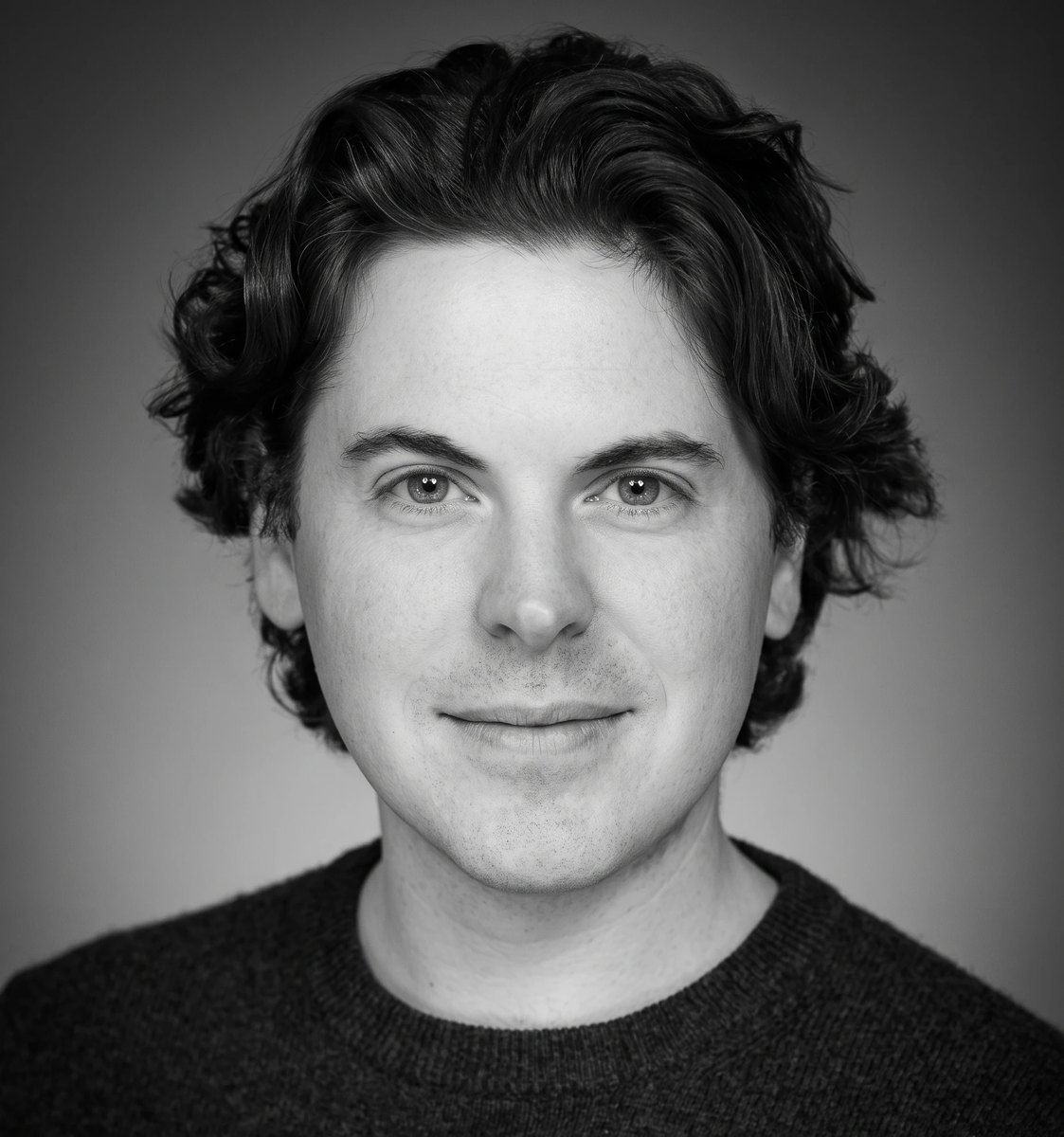
Michael Greenberg
AI at Google, Meta, and Samsung. Six patents. Leads member support and the certification prep guidance.
 Your AI Department is a registered Claude Partner Network company. Our members sit these exams under our partner standing. Facts on this page were last checked on November 25, 2026.